How to Remove Tomato Sauce Stains From Clothes
Tomato sauce stains combine food solids, oil, and red pigment. Lift away the excess, rinse from the back of the fabric, treat the mark before washing, and keep the garment out of the dryer until the stain is gone. Always follow the care label first.
Quick answer
Lift, rinse, treat, then wash
Scoop away sauce without rubbing, flush cool water through the back of the stain, apply a fabric-safe pretreatment, and wash on the warmest label-approved setting. Check the mark before drying.
Fresh or dried stain?
| Stain condition | Main risk | Safe first action |
|---|---|---|
| Fresh sauce on washable fabric | Rubbing spreads solids and oil | Lift excess and rinse from the back |
| Greasy red mark | Oil and pigment need separate treatment | Use a label-safe pretreatment and rinse thoroughly |
| Dried or previously heated stain | Heat may have set the pigment | Check the label and repeat a suitable treatment before drying again |
| Dry-clean-only or delicate item | Water or chemicals may damage it | Follow the cleaner or manufacturer instructions |
How to remove tomato sauce stains
1. Lift away the excess
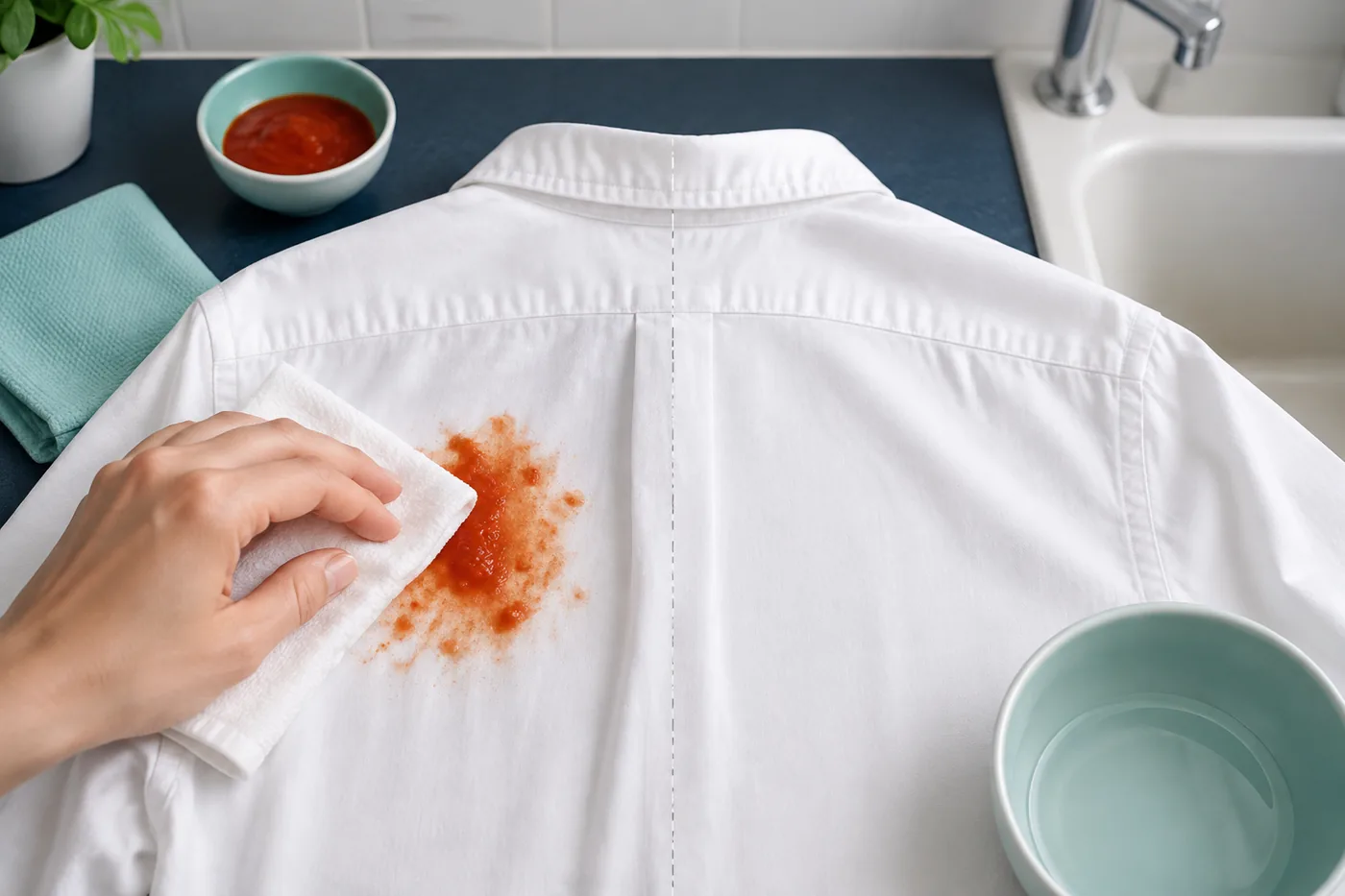
Use a spoon or dull edge to scoop sauce from the fabric. Do not wipe across the stain or push it deeper into the fibers.
2. Rinse from the back
Hold the stained area under cool running water from the reverse side when the care label allows it. This helps push loosened sauce away from the fabric.
3. Pretreat the oily and colored residue
Apply a stain remover or liquid laundry detergent approved for the garment. Spot-test an inconspicuous area first, especially on dark, dyed, delicate, or printed fabric. Rinse thoroughly after any product that the label says to rinse.
4. Wash by the care label
Wash using the warmest setting permitted by the garment label and the correct detergent amount. Do not use chlorine bleach unless both the label and product instructions allow it.
5. Check before drying
Inspect the damp garment in good light. Repeat a label-safe treatment if the mark remains. Dryer heat can make some stains harder to remove.
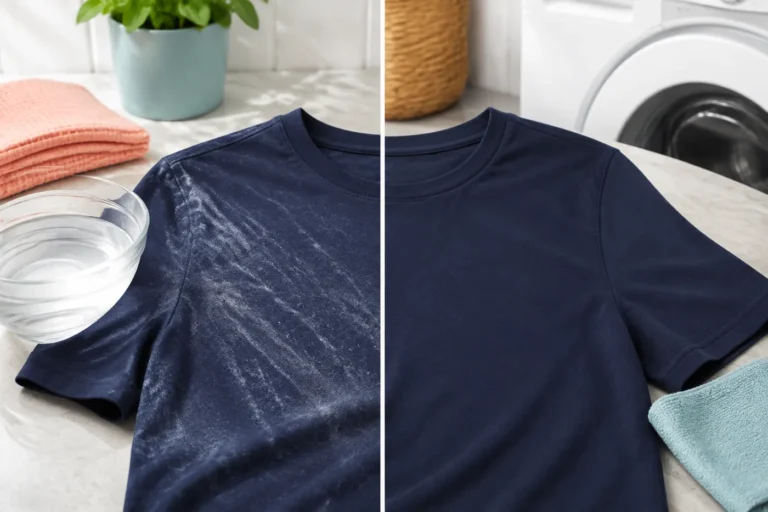
If the mark is pale, chalky, or blue rather than food-based, follow the separate steps for removing detergent stains from clothes.
When to stop
Use a professional cleaner for dry-clean-only clothing, valuable garments, fragile fibers, or a stain that remains after careful treatment. Never mix bleach with vinegar, ammonia, or other cleaners.
Frequently asked questions
Does hot water remove tomato sauce?
Use only the warmest temperature the care label permits. Rinse and pretreat first; heat is not a substitute for removing the oily and colored residue.
Can I put the garment in the dryer?
Only after checking that the stain is gone. Heat may set remaining pigment.
Fabric-specific cautions
Cotton and washable synthetics may tolerate a label-approved pretreatment, while silk, wool, rayon, printed graphics, and dark dyes can react to water, detergents, or stain removers. Dry-clean-only garments should go to a professional. For any colored or delicate item, test the treatment on an inside seam and stop if the color lifts.
If the stain has already been heated
Heat can make tomato pigment and oil harder to remove, but repeated aggressive scrubbing can damage the fibers. Rewet the area, follow the garment label, and use a product specifically approved for that fabric. If the mark remains after two careful attempts, professional cleaning may be safer than stronger home chemicals.
Sources
This guide follows stain-care guidance from the American Cleaning Institute, Persil, Clorox, and Tide.