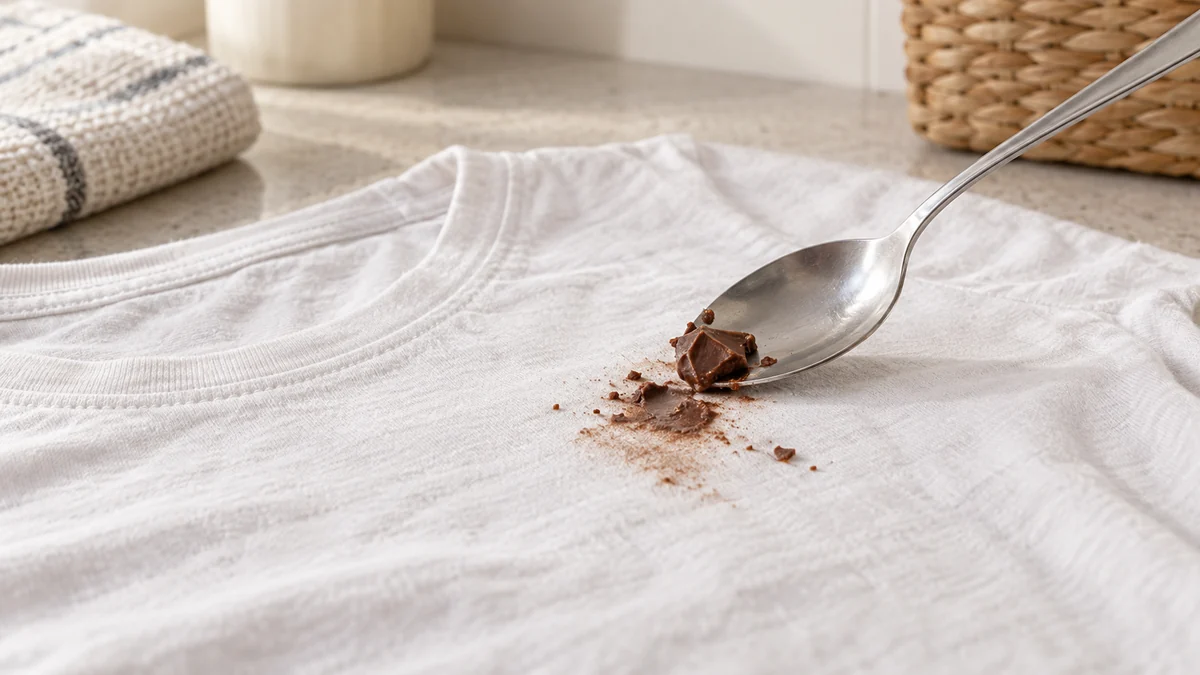
How to Remove Chocolate Stains From Clothes
Chocolate stains are easier to manage before they reach the dryer. For a washable garment, gently lift off the excess, rinse the back of the stain with cool water, apply a garment-safe pretreatment, and wash at the warmest temperature the care label allows. Inspect the fabric while it is still damp. If a mark remains, keep it out of the dryer. Repeat a label-approved treatment only while the fabric and dye remain unchanged; stop if treatment damages the material or makes no progress.
Updated October 21, 2026: Clarified pretreatment product directions, checking the fabric after air-drying, and when to stop treating a persistent mark.
Quick answer
Treat the stain before adding heat
Lift rather than rub, cool-rinse from the back, pretreat according to the product label, and then wash according to the garment label. A dry-clean-only or easily damaged item should go to a professional cleaner rather than into a home soak or wash.
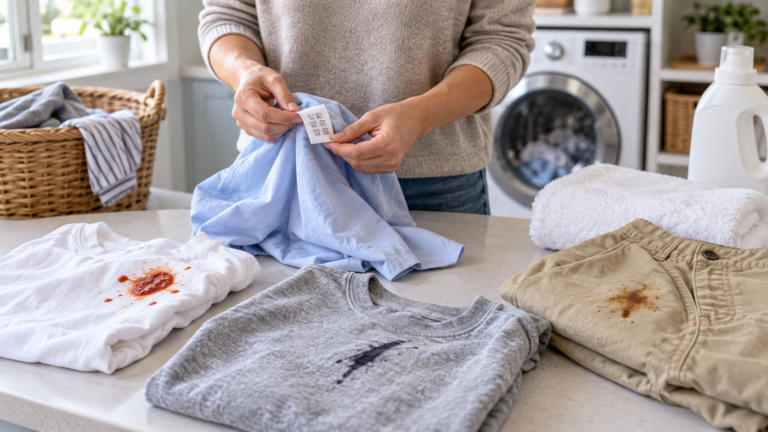
Check the care label before treating the stain
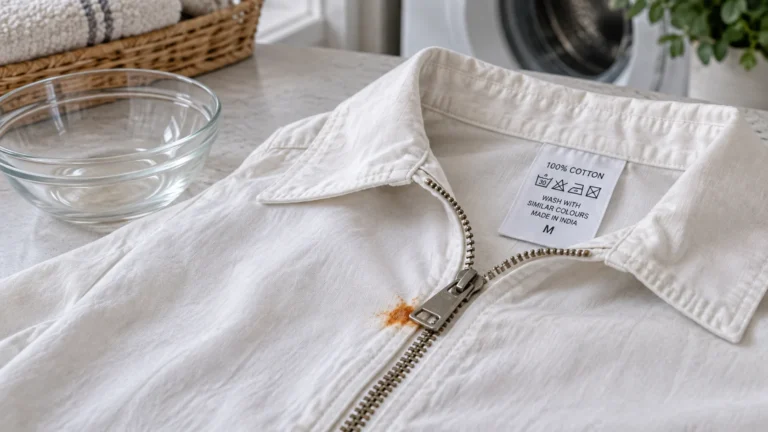
The care label sets the safe limits for washing, drying, and bleach. The Federal Trade Commission requires clothing labels to provide regular care instructions and warnings when a common procedure could damage the garment. If the label says dry-clean only, do not use the washable-clothing method below. Take the item to a professional and point out the stain.
For a washable garment, test an inconspicuous seam using the product label’s test method before treating a visible area. Follow any rinsing instructions and let the test area dry before comparing its color and texture with the surrounding fabric. Stop if dye transfers, the color lightens, or the finish changes.
Chocolate can leave both colored and greasy residue. If the source is uncertain or the spill contains another material, use the clothing stain decision guide before choosing a pretreatment.
Match the first step to the stain you have
| Stain condition | First safe move | Avoid |
|---|---|---|
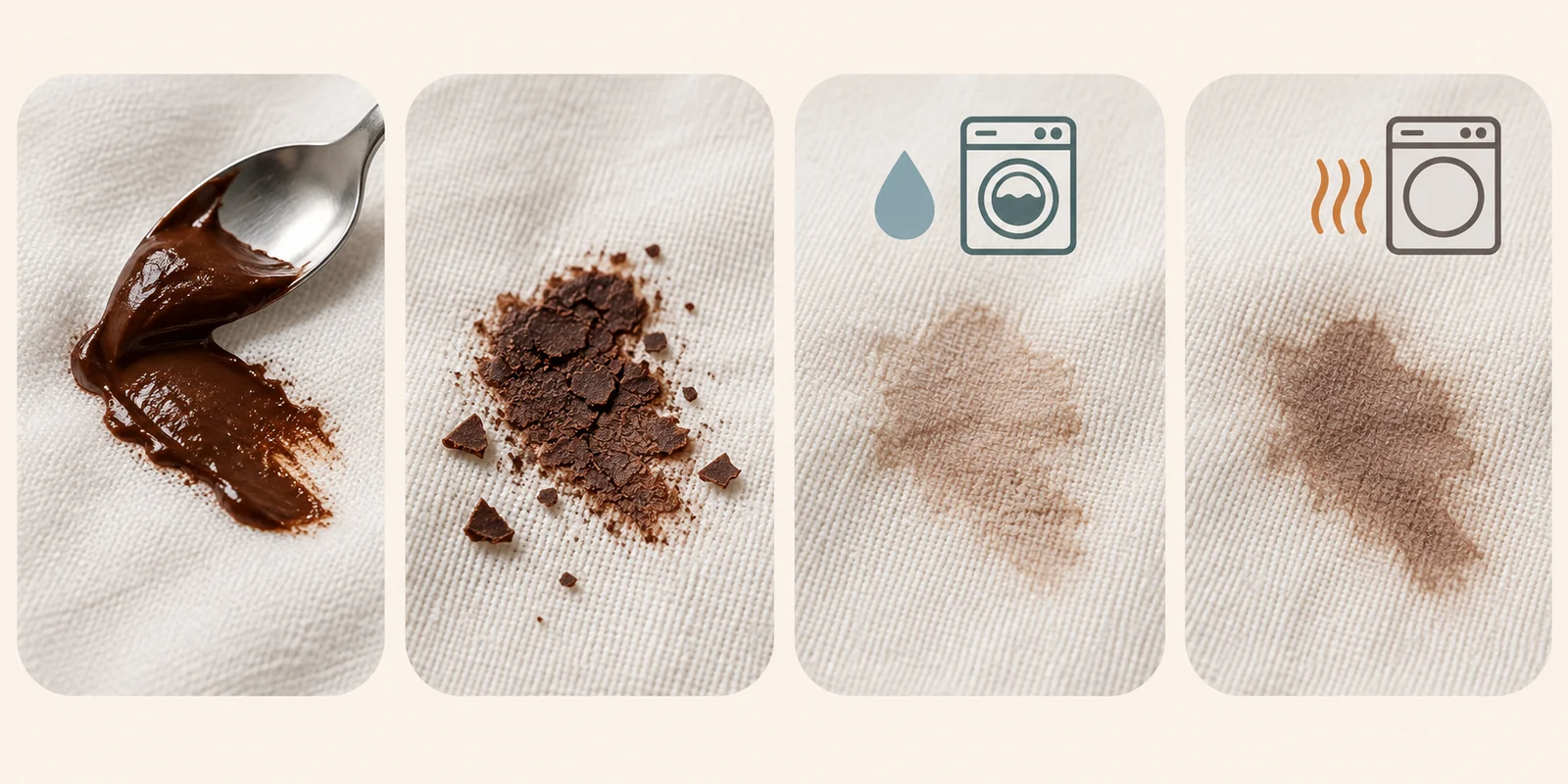
| Fresh, soft chocolate | Lift the excess with a spoon, then cool-rinse from the back | Wiping across the fabric or pressing the chocolate deeper |
| Dried or hardened chocolate | Gently remove only the pieces that release without pulling fibers | Aggressive scraping that roughens or snags the fabric |
| Washed but not machine-dried | Pretreat again, then rewash within the care-label limits | Assuming one wash means the stain is permanent |
| Machine-dried stain | Use a label-approved treatment, air-dry to assess it, and stop if there is no progress or fabric damage | Adding more dryer heat while the mark remains |
| Dry-clean-only or uncertain fabric | Follow the care label and use a professional cleaner when washing is not allowed | Generic soaking, bleach, or home chemical mixtures |
What you need for washable clothes
- A spoon or another smooth, dull edge
- Cool running water
- A prewash stain remover or liquid laundry detergent specifically labeled for pretreating this fabric
- A clean white cloth for spot-testing or blotting
- Your usual laundry detergent
- A drying rack or hanger if the stain needs another check
Do not combine stain-removal products. Do not add chlorine bleach, oxygen bleach, vinegar, ammonia, peroxide, or another cleaner unless both the garment label and the product directions allow that exact use. In particular, never mix bleach with ammonia, acids, or an unknown cleaning residue.
How to remove chocolate stains from washable clothes
1. Read the garment label
Confirm whether the item can be machine-washed or hand-washed and note its temperature, drying, and bleach instructions. Treat trim, printed graphics, elastic, and embellishments as part of the garment; a method that is safe for the base fabric may not be safe for every component.
2. Lift off loose chocolate
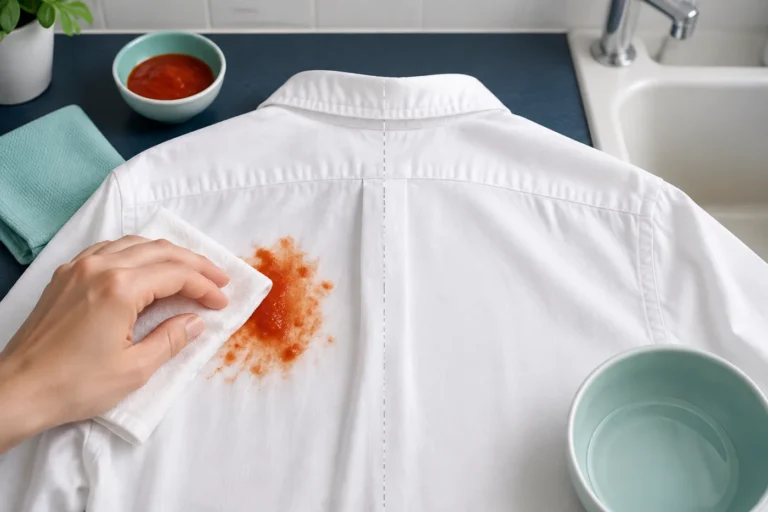
Use the edge of a spoon to lift chocolate away from the surface. Work gently so you do not spread the stain onto clean fabric. If the chocolate has hardened, remove only the pieces that come away without tugging at the fibers.
3. Rinse from the back with cool water
Turn the stained area face down and run cool water through the reverse side when the care label permits rinsing. This helps flush loosened chocolate back out rather than farther through the fabric. Tide’s chocolate-stain instructions use this reverse-rinsing step. Do not pull or scrape at dried chocolate that remains bonded to the fibers.
4. Pretreat with a label-approved product
Choose a prewash stain remover or a liquid laundry detergent whose directions explicitly allow direct pretreatment of the garment’s fiber and color. A detergent intended only for use in the wash is not automatically suitable for direct application. Follow the stated dose, contact time, and whether to rinse or wash immediately afterward. Do not substitute an overnight soak or a stronger concentration for those instructions.
Do not scrub hard. Gentle movement with clean fingers may help distribute a product when its label allows that use, but a brush or rough rubbing can damage the surface before the stain releases.
5. Wash at the warmest temperature allowed
After the cool rinse and pretreatment, wash the complete garment at the warmest temperature the care label permits, following the laundry product directions too. A cold-wash-only garment stays on a cold setting. Cool water for flushing does not mean every fabric must use a cold final wash: Maytag’s chocolate-stain guide distinguishes a cool rinse from the hottest fabric-safe wash.
6. Inspect the garment before machine drying
Check the damp fabric in good light for brown residue and a darker, greasy-looking halo. Do not machine-dry while either remains. A changed appearance is a clue, not proof of what is left: use the after-treatment checks below before choosing another treatment.
Let the garment air-dry in the way its care label permits, then inspect it again before using dryer heat. Wet fabric can make a faint mark hard to judge. Clorox’s chocolate-stain guidance also calls for checking success before dryer heat; its bleach instructions apply only to the fabrics and products it specifies, not to every chocolate stain.
After air-drying: decide whether to repeat or stop
- The brown color has faded, but a darker halo remains: Chocolate can leave greasy residue as well as color. If the care and product labels permit it, use a laundry pretreatment suitable for the fabric; do not move straight to bleach because the brown portion has faded.
- The mark is getting smaller or lighter, with no change to the fabric: Another treatment may help, but repeat only as the product label allows. Keep the same permitted concentration and contact time, and air-dry to assess the result.
- The correct method makes no visible progress: Check the stain’s history and the product directions instead of cycling through household chemicals. For a valuable garment or dryer-set mark, ask a professional cleaner whether further treatment is worthwhile. Tell them which products you used and whether the item has been tumble-dried.
- A lighter patch, transferred dye, fuzzing, or roughness appears: Stop treatment. A pale area may be dye loss rather than remaining chocolate; more stain remover cannot restore lost dye or repair damaged fibers. Follow the product’s removal directions and seek fabric-specific advice.
If the chocolate stain is old or has been through the dryer
An old mark may need repeated treatment, but a stronger mixture is not automatically safer. Start by removing any loose dried material, then cool-rinse and pretreat as the garment and product labels allow. Wash, inspect, and air-dry. Repeat only if the fabric and color remain stable.
A dryer-set stain can be harder to remove and may not disappear completely. Stop home treatment if the dye begins to lift, the fabric surface changes, or the care label does not support the method you would need next. A professional cleaner is the safer next step for a valuable, delicate, embellished, or dry-clean-only garment.
What changes for white, colored, and delicate clothing?
White clothes
White fabric is not automatically chlorine-bleach-safe. Use bleach only when the garment label permits it and the bleach product label covers that fabric and use. Treat and wash the chocolate stain first; bleach is not a substitute for lifting the food residue.
Colored or printed clothes
Spot-test the pretreatment on an inside seam. If color transfers or the tested area changes, rinse as directed and stop. Do not assume a product described as color-safe is suitable for every dye, print, trim, or finish.
Wool, silk, rayon, and embellished garments
Do not apply the general washable-clothing method unless the care label allows it. Delicate fibers, dyes, linings, trims, and embellishments can respond differently to water, rubbing, detergent, and bleach. Follow the label or use a professional cleaner.
Common mistakes that can make the stain harder to manage
- Rubbing a fresh spill: This spreads chocolate and works it farther into the fabric.
- Skipping the care label: Safe water temperature, bleach use, and drying method vary by garment.
- Applying several cleaners together: Product interactions can damage fabric and create avoidable chemical risks.
- Using the dryer before checking: Heat may set what remains.
- Treating every brown mark as chocolate: If the mark appeared only after washing and there was no known spill, investigate detergent residue, possible rust marks, or color transfer instead of repeating a chocolate treatment. Appearance alone does not identify the cause.
Questions about chocolate stains
Should chocolate stains be washed in hot or cold water?
Begin with a cool rinse from the back of the stain. After pretreatment, wash at the warmest temperature the garment care label permits. This separates the gentle flushing step from the final wash setting.
Can the same method be used for chocolate milk or ice cream?
For a washable garment, the same first steps are appropriate: lift or blot excess without spreading it, cool-rinse, pretreat with a garment-safe laundry product, and wash according to the care label. These spills contain additional ingredients, so inspect the damp fabric for both discoloration and an oily-looking area before drying.
What if the stain is still visible after washing?
Keep the garment out of the dryer and use the after-treatment checks. Repeat only when the product label allows it, the mark is improving, and the fabric and dye remain stable. No progress or a change to the material is a reason to stop, not to increase the dose.
Related laundry guides
- How to Remove Tomato Sauce Stains From Clothes
- How to Remove Detergent Stains From Clothes
- How to Remove Rust Stains From Clothes Without Damaging the Fabric