Washing Machine Drain Hose Problems: Kinks, Leaks, and Safe Checks
A washing-machine drain hose can cause slow draining, leaks, or a washer that will not spin when it is kinked, crushed, frozen, loose, or installed incorrectly. Start with the visible hose path and the exact installation instructions for your model. Do not use a universal hose height or insertion measurement.
What is the hose doing?
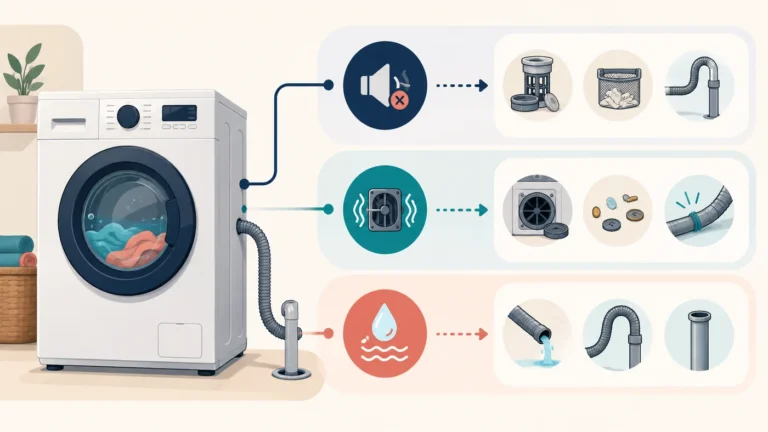
| Symptom | Likely direction | Safe next check |
|---|---|---|
| Water leaves slowly | Kink, blockage, or standpipe issue | Isolate power and inspect the visible hose path |
| Water leaks behind the washer | Loose, split, or poorly seated connection | Stop using the washer and arrange the correct replacement or service |
| Washer will not drain or spin | Drain restriction or pump issue | Use the model-approved drain checks before internal repair |
| Water backs up into the tub | Household drain or hose-routing problem | Contact a plumber if the appliance hose is clear |
Quick answer
Check the path before the pump
Unplug the washer when safe, look for a sharp kink or crushed section, and compare the hose routing with the model manual. If the hose is damaged, leaking, or disappears into a blocked standpipe, stop and arrange the correct service.
If water is already trapped in the drum, start with the complete washing-machine not-draining checks before moving the appliance or disconnecting the hose.
Safe drain-hose checks
1. Isolate power and protect the floor
Stop the cycle, disconnect power if you can reach the plug safely, and keep towels or a shallow pan nearby. Treat trapped water as potentially hot.
2. Inspect the external hose
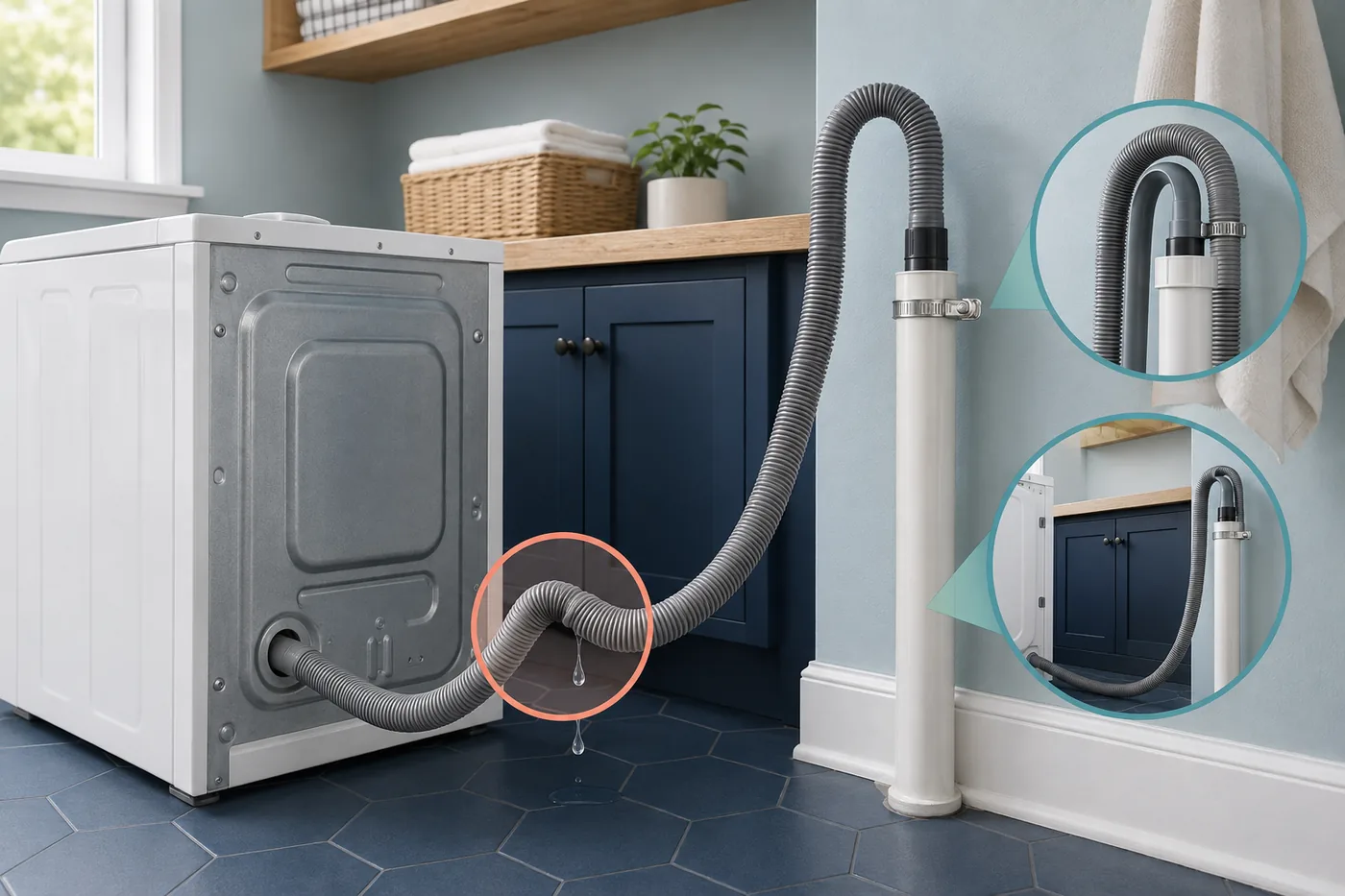
Look for kinks, crushing against the wall, cracks, frozen sections, loose clamps, and water marks. Do not pull the washer farther than you can safely control.
3. Compare the installation with the manual
Hose insertion, standpipe height, air gaps, and routing vary by model. Follow the installation guide rather than copying a measurement from another washer.
4. Decide whether the blockage is in the home plumbing
If the washer hose is clear but water backs up at the standpipe or sink, the restriction may be in household plumbing. Do not pour drain chemicals into the washer; use a qualified plumber.
When to replace or call service
Stop using the appliance when the hose is split, leaking, loose at a connection, or incompatible with the model. Arrange service for repeated drain errors, pump humming, electrical symptoms, flooding, or access that requires removing an unapproved panel.
Frequently asked questions
Can I use any washing-machine drain hose?
No. The replacement must match the appliance connection and installation requirements. Check the model manual or manufacturer support page.
Why does a washer drain slowly?
A kink, crushed hose, blocked filter, pump restriction, or household drain problem can slow flow. Start with the visible hose and model-approved checks.
Front-load and top-load hose differences
Both washer types can have a kinked or leaking hose, but access, hose routing, standpipe requirements, and pump-filter locations differ. A front-loader may retain water behind a locked door; a top-loader may stop because the lid or control system has not satisfied a safety condition. Use the exact installation and owner manual before moving the appliance or changing the hose position.
Do not use a universal measurement
Hose insertion depth, standpipe height, air gaps, and drain-loop requirements are installation details, not one-size-fits-all advice. If the manual is missing, find the manufacturer support page using the model number. Replace a hose with a compatible part rather than forcing a generic connection.
Sources
This guide follows model-specific drain guidance from LG, Samsung, Whirlpool, and Beko.