Low Water Pressure in the Shower? Find the Cause Before You Fix It
Quick answer: Check whether the weak flow affects only the shower, only hot water, several fixtures, or the entire home. If other fixtures are normal, clean the shower head and inspect a handheld hose for kinks. If every fixture is weak, look for a visible leak, recent utility work, a clogged whole-home filter, or a supply-pressure problem. Do not remove a flow restrictor or open a shower valve as a first fix.
What feels like low shower pressure is often restricted flow at the shower head. The difference matters: pressure is the force moving water through the pipes, while flow is the amount reaching the fixture over time. A clogged nozzle can reduce flow even when the home’s water pressure is normal.
The fastest way to find the cause is to compare locations, temperatures, and timing before replacing parts. Use the symptom table below, then follow only the checks that match what you observe.
Act promptly: Contact your water utility or property manager if pressure dropped suddenly throughout the property, especially after a main break, service interruption, or discolored water. If you see an active leak, bulging ceiling, wet wall, or rapidly moving water meter while fixtures are off, shut off the affected supply if you can do so safely and call a plumber.
Find the likely cause from the symptom
| What you notice | Likely area | Best first check |
|---|---|---|
| Only one shower is weak | Shower head, hose, selector, diverter, or valve cartridge | Clean the head and compare flow with nearby fixtures |
| Only hot water is weak | Water-heater supply, scale, or hot-side valve restriction | Compare hot flow at other faucets and inspect the heater for warnings |
| Several fixtures are weak | Main valve, filter, softener, pressure regulator, leak, or old piping | Check hot and cold fixtures throughout the home |
| Pressure drops when another fixture runs | Available supply, pipe sizing, regulator, or simultaneous demand | Repeat the comparison with other fixtures off |
| The problem appeared suddenly | Utility work, leak, debris, valve movement, or component failure | Check utility notices and visible plumbing conditions |
| The decline was gradual | Mineral buildup, clogged filter, corrosion, or aging regulator | Start with accessible screens and maintenance records |
Diagnose low shower flow in a safe order
1. Compare the shower with other fixtures
Run the bathroom sink, another shower, the kitchen faucet, and an outdoor hose connection if accessible. Compare both hot and cold water. The Portland Water Bureau recommends checking fixtures throughout the home because the pattern separates a local restriction from a supply problem.
- Other fixtures are normal: focus on this shower.
- All hot fixtures are weak: the problem may involve the water heater, its supply, or hot-water piping.
- Hot and cold fixtures are weak: consider the main supply, regulator, treatment equipment, leak, or utility service.
- Only one part of the home is affected: a branch pipe or local valve may be restricted.
2. Note whether the change was sudden or gradual
A gradual decline at one shower fits mineral buildup or an aging component. A sudden whole-home change deserves faster attention. Look for a utility alert, nearby street work, a recently operated main valve, a filter change, or signs of leakage. Ask a neighbor whether their pressure changed before assuming the fault is inside your home.
After a significant pressure drop or service interruption, the CDC advises contacting the water utility for local instructions and flushing faucets and showers until the water runs clear and becomes hot. Follow any boil-water or flushing notice from the utility instead of a general online procedure.
3. Clean the shower head without damaging it
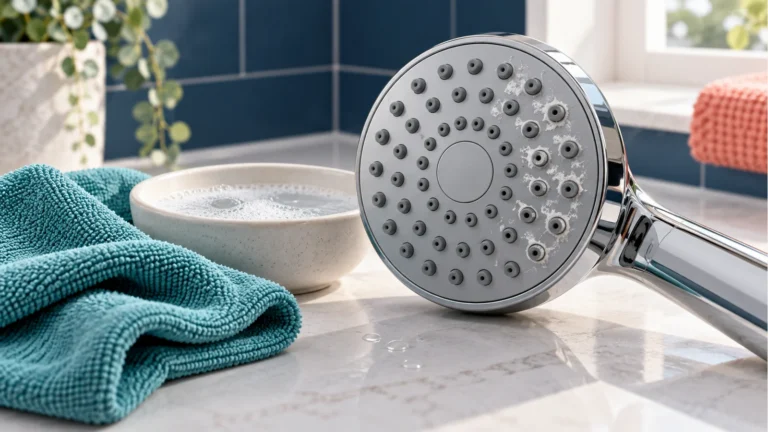
Uneven jets, sideways spray, or white deposits point to a restricted shower head. Begin with warm water, a soft cloth, and gentle rubbing of flexible nozzles. Use vinegar or descaler only if the manufacturer allows it for the exact finish. Our guide explains how to clean a shower head safely.
Do not insert pins into nozzles or automatically soak a decorative finish overnight. Those methods can damage the spray face or coating. If cleaning does not help and the shower head is old, a WaterSense-labeled replacement can provide tested spray force and coverage while using no more than 2.0 gallons per minute.
4. Inspect visible shower components
For a handheld shower, straighten the hose and check for a sharp bend. Make sure a multi-function head is fully clicked into one spray setting. On a tub-shower combination, watch whether substantial water continues from the tub spout after the diverter is engaged; a worn diverter can reduce flow to the shower head.
Stop at visible observations. A pressure-balancing valve or cartridge sits behind the trim and affects both flow and temperature. Opening the valve incorrectly can cause a leak or unsafe temperature control, so use the exact service manual or a qualified plumber.
5. Check recent changes to the home’s supply
If multiple fixtures are weak, think about what changed. Was a main shutoff operated? Was a whole-home filter replaced? Is a water softener bypassed or overdue for service? Did plumbing work loosen sediment? Confirm only that accessible valve handles and equipment match their normal operating positions. Do not force a corroded valve or adjust a pressure regulator without instructions.
6. Measure flow if you want a useful comparison
A bucket and timer measure flow, not pressure. Place a known-volume container under the shower, run it at full flow, and record how long it takes to fill. For a one-gallon container, divide 60 by the filling time in seconds to estimate gallons per minute. Repeat after cleaning to see whether flow improved.
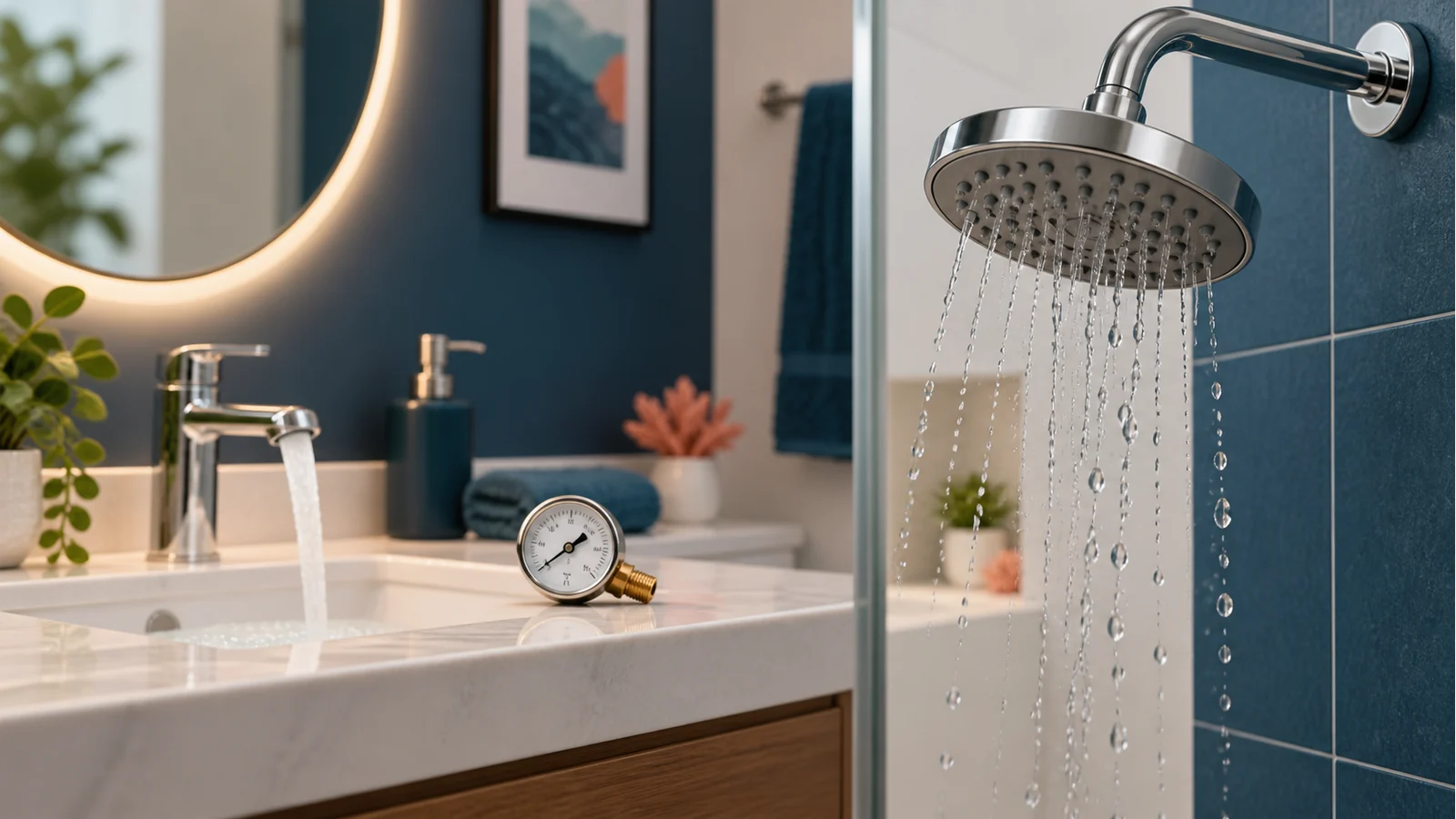
For actual service pressure, the EPA describes using a pressure gauge on a hose bib while all other water-using fixtures and systems are off. It says household fixtures generally perform best when incoming pressure is between 45 and 60 psi. A substantially low reading needs investigation for a leak, supply issue, regulator, or restriction—not random adjustment.
Do not remove the shower-head flow restrictor
A flow restrictor limits water use, but it does not necessarily create poor performance. WaterSense-labeled shower heads are independently tested for spray force, coverage, and performance across different household pressures. Removing or damaging a restrictor can increase water and energy use, violate local requirements, void warranty coverage, or produce an unpleasant spray without fixing the supply problem.
If a clean shower head still performs poorly while other fixtures are normal, check its manual and consider replacing it with a compatible WaterSense model. Match the shower head and automatic-compensating mixing valve requirements rather than modifying internal parts.
When to call the utility, landlord, or plumber
| Who to contact | When |
|---|---|
| Water utility | Sudden neighborhood-wide pressure loss, discolored water, main work, or a possible service interruption |
| Landlord or property manager | A shared building, inaccessible valves, several affected units, or concealed leaks |
| Licensed plumber | Active leak, weak flow at multiple fixtures, suspected regulator or cartridge fault, old galvanized piping, or pressure outside the expected range |
| Water-heater technician or plumber | Only hot-water fixtures are weak, or the heater leaks, makes unusual sounds, or shows an error |
Do not delay if low pressure comes with water damage, a hissing sound behind a wall, unexplained meter movement, or a sudden increase in water use. For other bathroom maintenance, browse our Bathroom guides or use the bathroom cleaning checklist.
Frequently asked questions
Why is only my shower pressure low?
If nearby fixtures have normal hot and cold flow, the likely causes are local: a clogged shower head, kinked handheld hose, worn diverter, restricted cartridge, or shower-specific valve or pipe. Clean the head first, then use the model’s service instructions or call a plumber.
Why is shower pressure low only with hot water?
Compare hot flow at other faucets. If all hot fixtures are weak, inspect the water heater for warnings or leakage and arrange service. If only the shower is affected, the mixing valve or cartridge may be restricted.
Will a high-pressure shower head solve the problem?
It may create a stronger-feeling spray when supply pressure is adequate, but it cannot repair a leak, failing regulator, clogged pipe, or utility problem. Diagnose the pattern first and choose a certified shower head suited to the plumbing system.
Can low pressure indicate a leak?
Yes, especially when pressure drops suddenly at multiple fixtures. Look for wet areas and check whether the meter’s leak indicator moves while all water use is off. A concealed or active leak needs prompt professional attention.