How to Unclog a Bathroom Sink Safely
Quick answer: Most bathroom sink clogs begin with hair and soap buildup around the stopper. Remove standing water, clean the accessible stopper area, then use a plastic hair-removal tool or a flat-cup sink plunger. If any drain chemical is already in the sink, do not plunge, snake, or open the trap because the chemical can splash. Stop and call a plumber if several fixtures are slow, wastewater backs up, a pipe leaks, or the clog remains after the safe mechanical checks below.
A slow bathroom sink and a fully blocked sink need the same diagnosis, but the safest tool depends on where the blockage sits. Start at the drain opening and move deeper only when the earlier step fails. This order clears common clogs without immediately dismantling plumbing or combining products.
Check for drain cleaner first. Ask whether anyone has poured a chemical opener, bleach, toilet cleaner, or another product into the drain. If the answer is yes or unknown, do not add anything, plunge the drain, insert a tool, or remove the P-trap. Keep people away from the sink and follow the product label or call a plumber. For an exposure in the United States, contact Poison Control at 1-800-222-1222; call 911 for severe symptoms.
Match the symptom to the likely clog location
| What the sink does | Likely starting point | Best first action |
|---|---|---|
| Drains slowly but never fills | Hair or residue at the stopper | Lift or remove the stopper and clean the accessible area |
| Water stands in the basin | Dense stopper or drain-body clog | Remove standing water, then use a hair tool or sink plunger |
| Plunger improves flow only briefly | Debris deeper in the trap or branch | Try a hand snake if no chemical is present |
| Trap leaks or cabinet is wet | Loose, damaged, or corroded connection | Stop using the sink and repair the leak |
| Sink gurgles and smells after clearing | Trap, vent, or branch-drain problem | Refill the trap and arrange service if it continues |
| Several fixtures are slow or backing up | Shared branch or main drain blockage | Limit water use and call a plumber |
What you need
- Rubber or nitrile gloves
- A cup or small container for standing water
- Old towels and a bucket
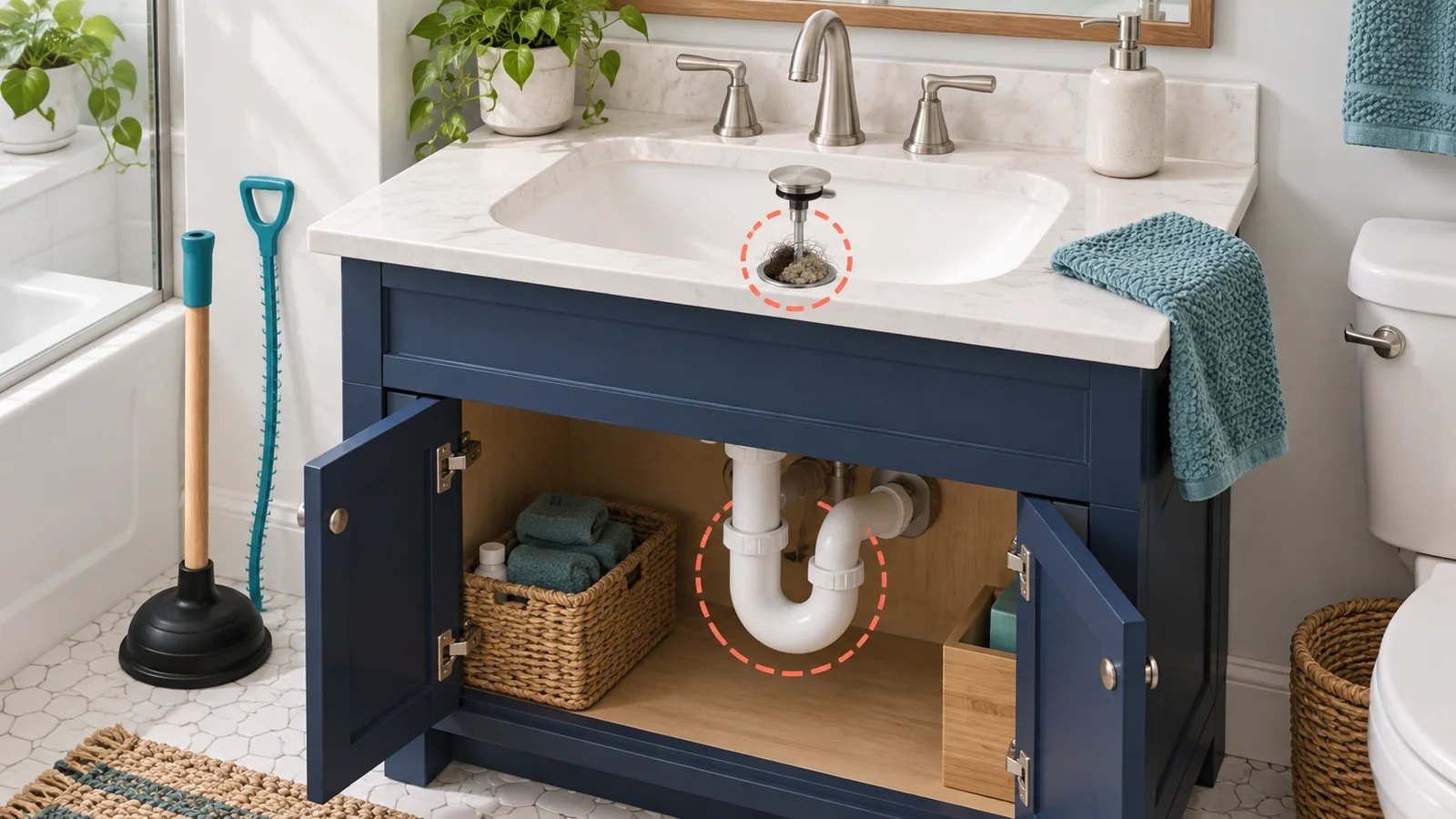
- A narrow plastic barbed hair-removal tool
- A flat-cup sink plunger, kept separate from the toilet plunger
- An optional hand-operated sink auger for a deeper clog
Do not improvise with a sharp metal hanger. It can scratch the sink, damage a stopper seal, or become lodged in the drain.
How to unclog a bathroom sink safely
1. Decide whether the problem is only in this sink
Briefly run a nearby tub or shower and flush the toilet once only if each fixture is already draining normally. If several fixtures gurgle, drain slowly, or back up, stop testing. The blockage may be beyond the bathroom sink, and adding more water can cause an overflow. Call a plumber for a shared drain problem.
2. Remove the standing water
If the basin is full, scoop the water into a bucket until only a shallow layer remains. This makes the drain opening visible and prevents dirty water from spilling over the rim. Treat the water as contaminated: wear gloves, keep children and pets away, and clean splashed surfaces afterward.
3. Check the stopper and drain opening
Raise the stopper fully and use a flashlight to look for hair or residue immediately below it. Some stoppers lift or unthread from above. Traditional pop-up stoppers may be held by a horizontal pivot rod under the sink. Kohler advises checking the instructions for the specific drain because designs vary.
If the stopper does not lift out with gentle movement, do not force it. Photograph the linkage under the sink before moving anything, or consult the faucet or drain manual. Remove only debris you can reach without pushing it farther down. Clean the stopper with warm water and dish soap, then reinstall it in the same orientation.
4. Use a plastic hair-removal tool
When no chemical cleaner is present, slide a flexible plastic hair tool a short distance into the drain beside the stopper opening. Keep hold of the handle, move the tool gently, and pull it straight back. Remove the captured hair into the trash rather than rinsing it into another drain. Repeat only while the tool moves freely.
Stop if the tool catches on a fixed part, will not come back easily, or the drain assembly shifts. A barbed tool can snag the pop-up mechanism if it is forced.
5. Plunge the drain with the overflow sealed
A bathroom sink overflow opening lets air bypass the plunger, so cover it firmly with a wet cloth. Add enough water to cover the rim of a clean flat-cup sink plunger. Center the cup over the drain, press gently to create a seal, and make several controlled up-and-down strokes. Lift the plunger and see whether the water drains.
Repeat once if flow improves. Stop if a connection under the sink leaks or moves. Never plunge after a drain opener has been used; pressure can throw corrosive liquid toward your face and skin.
6. Try a hand auger only when the path is clear
If the stopper area is clean and plunging does not work, a hand-operated sink auger can reach a deeper blockage. Follow the tool maker’s instructions and the sink-drain route. Feed the cable slowly without forcing it, rotate it by hand, and retract it carefully. Stop if the cable binds, the pipe moves, or you meet hard resistance.
Powered drain machines can damage small fixture pipes and are not a beginner tool. A clog that resists a short hand auger belongs with a plumber.
7. Treat P-trap removal as an optional repair
The curved pipe below the sink holds water to block drain gases and can collect debris. If it is plastic, accessible, in good condition, and no chemical has been used, a confident homeowner may place a bucket underneath, photograph the connections, loosen the slip nuts by hand, empty the trap, clean it, and reinstall the washers in their original direction.
Skip this step if the pipe is metal, corroded, glued, cracked, difficult to reach, or connected in an unfamiliar way. Do not force a nut. After reassembly, run a small amount of water while watching every joint, then dry the pipe and check again for moisture. Any leak means stop using the sink until the connection is repaired.
8. Test the result without flooding the drain
Run warm tap water at a low flow and watch the basin. Increase the flow only when the water continues to drain freely. Check inside the cabinet for drips. A sink that still drains slowly, clogs again within days, or sends water into another fixture has a deeper problem.
Why we do not recommend boiling water or homemade mixtures
Boiling water can stress some sink materials, soften certain plastic connections, and create a burn hazard without removing a hair mass. Baking soda and vinegar fizz, but the reaction does not reliably pull a compact hair-and-soap clog from the stopper or trap. More important, adding a homemade mixture is unsafe when an unknown drain product may already be present.
Mechanical removal gives you direct evidence that the obstruction is gone. The US Environmental Protection Agency also lists a plunger or plumber’s snake as alternatives to drain cleaner. If you choose any commercial product, use only one product exactly as labeled and confirm that it is compatible with the fixture, piping, septic system, and any previous treatment.
When to stop and call a plumber
- Chemical drain cleaner is present or its use is uncertain.
- Several fixtures are slow, gurgling, or backing up.
- Water appears in the tub or shower when the sink drains.
- A pipe, slip nut, stopper linkage, or cabinet connection leaks.
- The drain pipe is corroded, cracked, glued, or difficult to access.
- A hand tool cannot move freely or becomes stuck.
- The clog returns soon after mechanical cleaning.
If the sink drains but a sewage odor remains, use our bathroom sewage-smell diagnostic to check the trap water seal, toilet base, and shared vent symptoms.
How to prevent another bathroom sink clog
- Use a removable hair catcher that does not interfere with the stopper.
- Brush hair away from the basin before rinsing it.
- Wipe heavy cosmetics, oils, and thick products into the trash instead of the drain.
- Clean accessible stopper residue during your regular bathroom cleaning.
- Respond to slowing flow before the basin becomes completely blocked.
Frequently asked questions
What is the fastest safe way to unclog a bathroom sink?
When no chemical is present, clean the stopper and use a plastic hair-removal tool. Hair commonly collects at the stopper where it can be removed directly. Use a flat-cup plunger next if the blockage remains.
Can I plunge a bathroom sink with an overflow?
Yes, but seal the overflow opening with a wet cloth so the plunger can create pressure. Use a flat-cup sink plunger and controlled strokes. Do not plunge if drain cleaner may be in the water.
Why does my sink keep clogging after I remove the hair?
More debris may remain in the drain body, P-trap, or branch pipe. A misaligned stopper can also catch hair repeatedly. Recurring clogs, especially with gurgling or another slow fixture, justify a plumbing inspection.
Can I use the same plunger as the toilet?
A clean flat-cup sink plunger seals better on a basin and avoids bringing toilet contamination to the sink. Keep the tools separate and disinfect reusable equipment according to its material and care instructions.
Sources
- US Environmental Protection Agency: Household Hazardous Waste
- Poison Control: Drain Cleaner Safety
- New Jersey Department of Health: Dangerous Chemical Combinations
- Kohler: Adjusting and Removing Pop-Up Drains
- The Home Depot: Bathroom Sink Unclogging Methods
- This Old House: Mechanical Bathroom Sink Clearing