Toilet Leaking at the Base? Find Where the Water Starts Before You Repair It
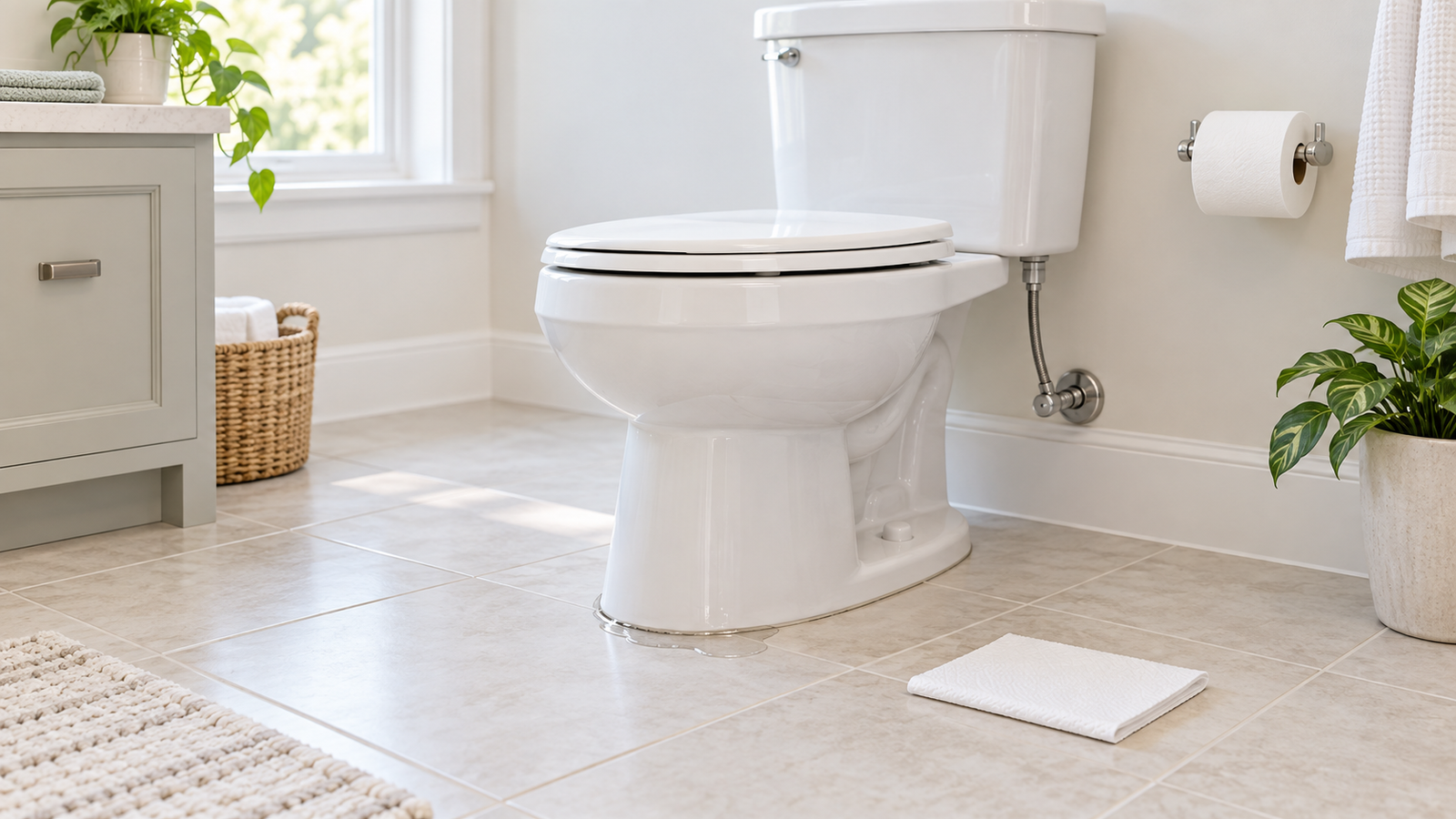
Quick answer: Water around a toilet base does not automatically prove that the seal below the toilet has failed. Water from the tank, supply line, splash-out, or condensation can run down the porcelain and pool at the floor. Dry the area first and identify where fresh water begins before buying parts or moving the toilet.
Stop and get appropriate help if the water is dirty, smells like sewage, spreads after a flush, reaches electrical equipment, comes through a soft or swollen floor, or appears to come from cracked porcelain. Do not keep flushing to test a leak that is getting worse.
First, trace the water without taking anything apart
- If water is close to an outlet, cord, or electrical device, keep clear of the area. Do not stand in water to reach a breaker.
- Dry the floor, outside of the bowl, tank, supply connection, and area behind the seat with paper towels.
- Put a dry paper towel beneath the tank-to-bowl connection and another near the shutoff valve and supply line. Look for visible drips before flushing.
- Flush once only if there is no electrical concern and the floor is dry. Watch from the side.
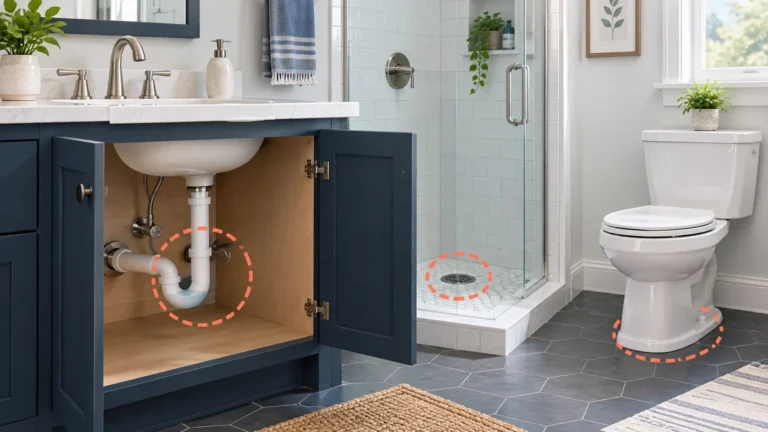
- Note the first place that becomes wet. Water that starts high on the fixture can travel down and make the base look like the source.
| What you observe | More likely route | First sensible action |
|---|---|---|
| Water begins at the tank, supply connection, or under the tank, then runs down the bowl | Supply-line, tank-to-bowl, or tank-component leak | Stop using it if water continues. Do not overtighten fittings or bolts; use the model manual or arrange service. |
| Tiny droplets cover the cold tank, bowl, or supply valve; no single drip point is visible | Condensation | Dry the surface, improve bathroom ventilation, and compare room humidity with a nearby room. |
| Water appears around the base only during or immediately after a flush | A base, drain, or seal path needs inspection | Stop using the toilet if the water is dirty, odorous, or spreading. Arrange professional inspection. |
| The bowl rocks, the floor feels soft, or water returns after the source above looks dry | Possible movement or hidden floor/drain damage | Do not shim, caulk, or tighten the toilet as a quick fix. Limit use and get qualified help. |
If water comes from above the base
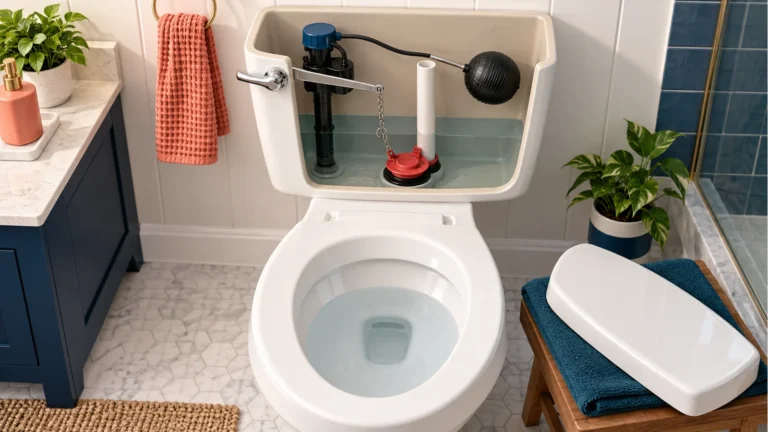
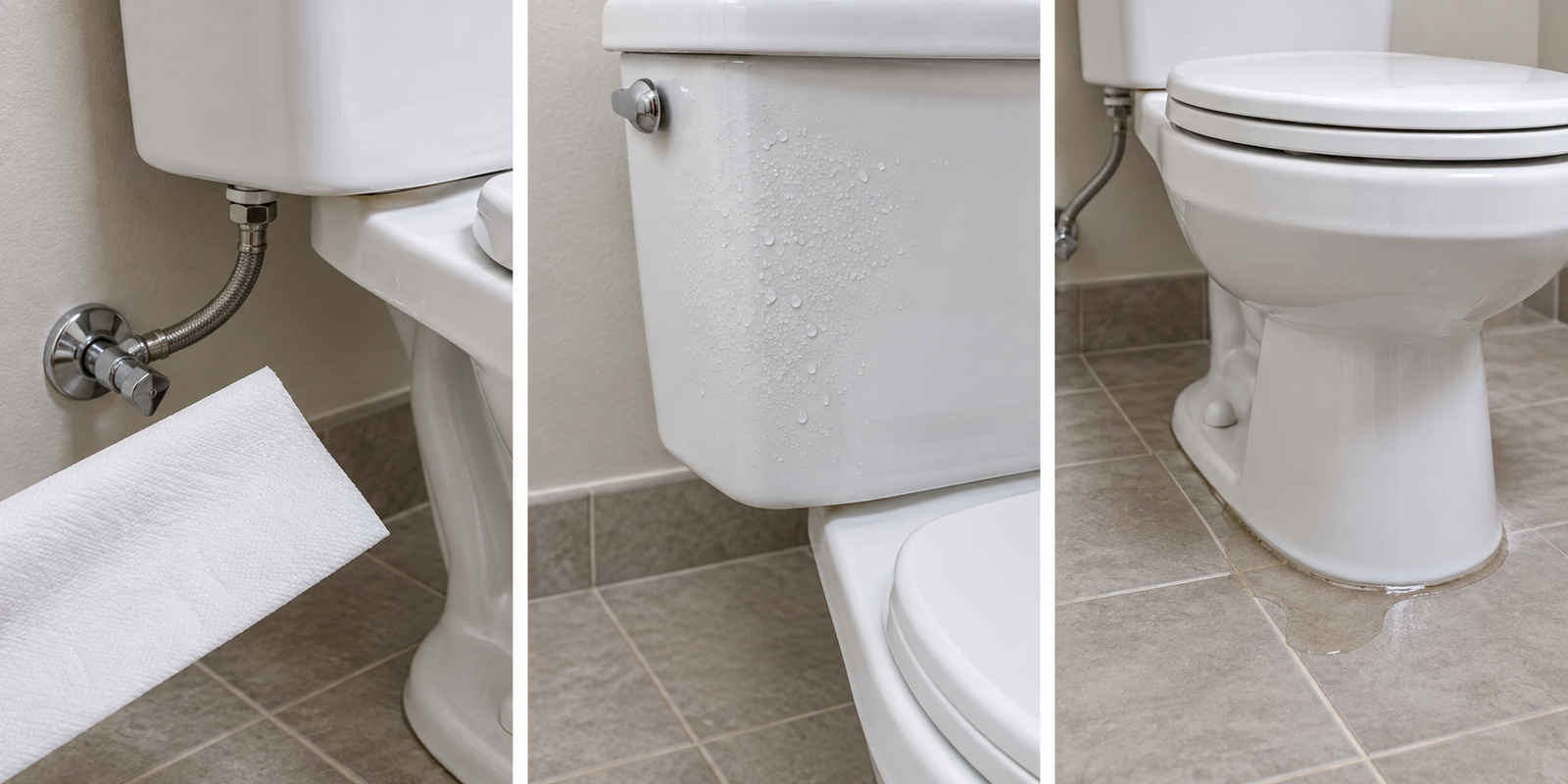
Water that starts above the floor is not a base-seal diagnosis. Check for dampness at the supply line, shutoff valve, tank bolts, and the space where the tank joins the bowl. Do not force, repeatedly tighten, or disassemble fittings just because they are wet; toilet designs and connection methods vary.
If water is running continuously inside the bowl rather than onto the floor, use Toilet Keeps Running? Identify Where the Water Is Going Before You Replace a Part.
If the toilet is wet all over: check for condensation
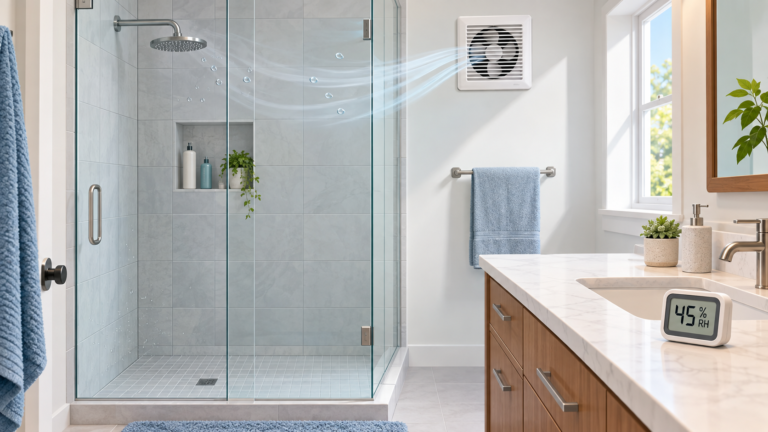
Condensation tends to look like scattered droplets on the outside of the tank, bowl, or cold supply valve rather than a single line of water from one fitting. It may occur without a flush, especially in warm, humid weather or after a shower.
The EPA recommends keeping indoor relative humidity below 60%, ideally between 30% and 50%. For a practical room-reading check, see What Should Indoor Humidity Be?.
If water appears at the base after a flush
When the porcelain and fittings above the floor remain dry but fresh water appears around the base after a flush, the toilet-to-drain connection or the floor around it needs attention. A worn or disturbed seal is one possibility, but the symptom alone cannot confirm a failed part.
Do not keep flushing to prove the point. Do not remove the toilet, disconnect the supply line, or tighten the mounting bolts unless you know the exact model and repair method. Porcelain can crack if hardware is overtightened, and lifting a toilet exposes the drain connection.
If the toilet also bubbles or gurgles, use Toilet Gurgling? Diagnose the Drain, Vent, or Sewer Problem Safely. If a flush is weak or the bowl does not clear, use Toilet Not Flushing? Safe Checks for the Handle, Tank, and Bowl.
What not to do
- Do not hide recurring water with a bath mat, caulk, or frequent mopping.
- Do not assume a new wax ring will solve every floor leak.
- Do not overtighten tank, supply, or base hardware.
- Do not use drain chemicals or pour cleaners around the base to solve an external leak.
- Do not continue using a toilet that is leaking wastewater, rocking, or wetting a soft floor.