Dryer Not Heating? Safe Checks Before Service
Quick answer
If your dryer runs but does not heat, first confirm that a heated cycle is selected. For an electric dryer, switch both linked breaker poles fully off and back on once; the drum can turn even when the heating side has lost power. For a gas dryer, confirm the supply valve is open only if you can identify it from the installation manual. Clean the lint filter and inspect the visible exhaust hose for crushing. If the drum stays completely cold, an internal heater, igniter, thermostat, or thermal protection device may need professional service.
“Not heating” and “taking too long to dry” are different problems. A completely cold drum points more strongly to the cycle setting, electrical supply, gas supply, or heating system. A warm dryer that leaves clothes damp more often needs an airflow, load, washer-spin, or sensor check.
Stop immediately if you notice a safety warning
- Gas odor: do not operate switches or create a flame. Leave the area and contact the gas utility or emergency service from a safe location.
- Smoke, sparks, burning odor, scorched plug, or hot outlet: stop the dryer and have the appliance and electrical supply inspected.
- Breaker trips again: leave it off. Repeated resetting can hide an electrical fault.
- Dryer or cord was recently installed or moved: use a qualified installer if the appliance has never heated in this location.
- Do not remove panels, test live voltage, bypass a thermal fuse, or disassemble a gas burner as part of a basic home check.
Start with the symptom
| What the dryer does | Likely area to check first | Best next move |
|---|---|---|
| Drum turns but stays completely cold | No-heat cycle, partial electric supply, closed gas valve, or internal heating fault | Check settings and supply, then request service if heat does not return |
| Dryer gets warm but clothes stay damp | Lint filter, crushed or blocked vent, oversized load, or soaking-wet clothes | Restore airflow and correct the load before assuming a heater failure |
| Heat starts, then disappears | Restricted airflow, overheating protection, or a failing heating component | Stop using it until the full vent and appliance are inspected |
| Dryer has never heated after installation | Electrical, cord, vent, or gas-supply installation | Use the installation manual and a qualified installer |
| An error or airflow code appears | Model-specific detected fault | Record the code and follow the exact owner’s-manual procedure |
Safe checks for a dryer that is not heating
1. Test a known heated cycle
Empty the drum and select Timed Dry with a normal or high heat setting. Turn off Air Fluff, Air Only, No Heat, and energy-saving options that intentionally delay or reduce heat. Run the dryer for the short test described in its manual, then stop it and check whether the drum feels warm. Do not reach into a moving drum.
If there is any warmth, skip to the airflow and load checks. If the drum remains cold, continue with the correct supply check for an electric or gas model.
2. Check both electric-dryer breaker poles
Most full-size electric dryers use a 240-volt circuit with two linked breaker poles. One side can lose power while the motor and control panel still work, so the dryer may tumble without heat. Unplug the dryer if the manual directs, move the linked dryer breaker fully to Off, wait about 30 seconds, and switch it back On once.
Do not open the outlet, cord terminal, or electrical panel beyond operating the labeled breaker. If the breaker trips again, the plug is loose or discolored, or the dryer was recently installed, stop and call a qualified electrician or appliance technician.
3. Check the gas supply without disassembly
A gas dryer can tumble with its gas supply closed. If there is no gas odor and the installation manual clearly identifies the shutoff valve, confirm that its handle is in the open position shown by the manufacturer. Also check whether other gas appliances are operating or whether an LP tank is empty.
Do not loosen a fitting, purge a line, attempt ignition, or remove the burner access panel. If the valve is open and there is still no heat, arrange service.
4. Clean the lint filter
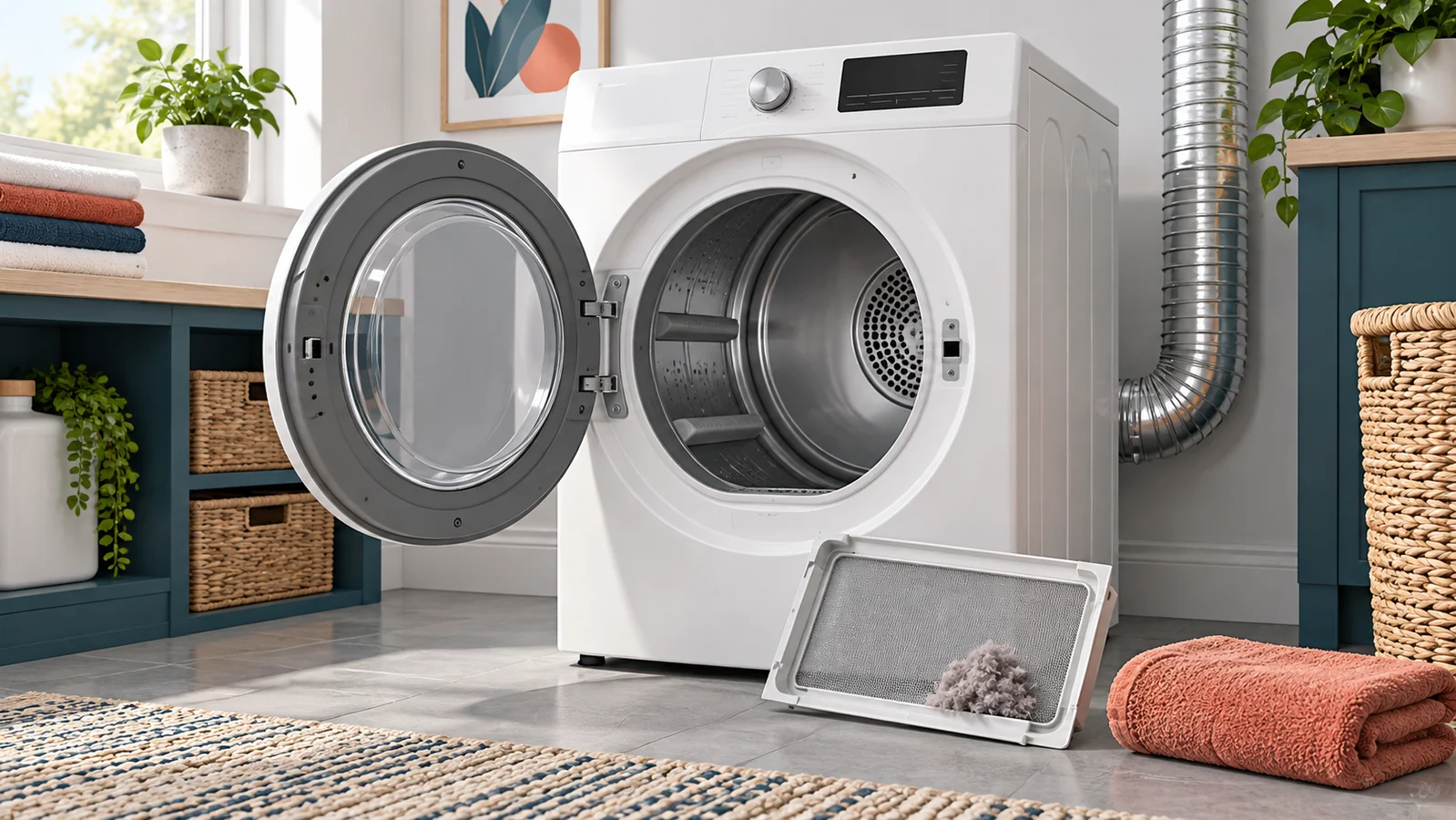
Remove lint from the filter before every cycle. Hold the screen to the light; if residue from dryer sheets or fabric products blocks the mesh, follow the dryer manual’s deep-cleaning method and let the filter dry completely before reinstalling it. Never run the dryer without the filter.
5. Inspect the visible vent path
With the dryer off, look behind it for a crushed, sharply kinked, loose, or damaged exhaust duct. Check the outdoor vent while the dryer runs only from a safe ground-level position; the cover should open and air should flow. Do not reach into a moving fan or use the dryer with the duct disconnected as a routine test.
Visible lint at the outdoor outlet can be removed after the dryer is off. A blockage inside a long or concealed duct needs a professional vent cleaning. The U.S. Fire Administration warns that an unclean lint filter or dryer vent raises the risk of a clothes-dryer fire.
6. Correct the load and incoming moisture
Clothes need room to tumble through warm air. Divide an overfilled load and separate heavy towels from lighter fabrics. If clothes leave the washer dripping or unusually wet, run a drain-and-spin cycle before drying. Our guides to a washing machine that will not spin and a washer that will not drain can help identify the source.
7. Use the model’s diagnostic or error guidance
Some dryers have an installation or vent-blockage test. Run only the sequence in the owner’s manual for your exact model and record every code. A code can distinguish low voltage, restricted exhaust, abnormal temperature, or a component fault without opening the cabinet.
If the dryer is warm but clothes are not drying
Warmth means the dryer is producing at least some heat. Focus on moving moisture out of the drum:
- Clean the lint screen and check the complete exhaust path.
- Use the cycle recommended for the fabric and load size.
- Separate thick items from lightweight clothes and untangle sheets.
- Use Timed Dry for a very small load if the manual says the moisture sensor needs more fabric contact.
- Clean accessible moisture-sensor bars only by the method in the owner’s manual.
If drying improves when the load is smaller but the vent is clear, the original load may simply have been too large or too wet. If the dryer repeatedly overheats, shuts down, smells hot, or loses heat mid-cycle, stop using it and arrange service.
Internal faults that need a technician
| Possible fault | What it controls | Why service is appropriate |
|---|---|---|
| Heating element | Produces heat in many electric dryers | Diagnosis requires cabinet access and electrical testing |
| Igniter or gas-valve component | Starts and controls heat in a gas dryer | Gas and ignition systems require trained service |
| Thermal fuse or cutoff | Interrupts operation or heat after unsafe temperature | It must not be bypassed, and the overheating cause must be corrected |
| Thermostat, thermistor, relay, or control | Measures or switches heat | Symptoms overlap and parts should not be replaced by guesswork |
| Damaged cord, outlet, or terminal | Supplies power to the dryer | High-voltage damage can create shock and fire risk |
When to call for service
- The dryer remains completely cold after the correct cycle and supply checks.
- The breaker trips again or the plug, cord, or outlet shows heat damage.
- A gas dryer has supply but will not heat, or you cannot confirm the valve safely.
- The vent is concealed, inaccessible, repeatedly blocks, or fails the model’s airflow test.
- The dryer overheats, stops mid-cycle, smells burned, smokes, or makes unusual electrical sounds.
- An internal heating or safety component is suspected.
Frequently asked questions
Why does my electric dryer spin but not heat?
A full-size electric dryer commonly uses two sides of a 240-volt circuit. The motor may run when one side has power, while the heater does not. Reset the linked breaker once; if the problem returns, use an electrician or appliance technician.
Can a clogged vent make a dryer stop heating?
A restriction often causes long drying times and may make some dryers reduce heat for protection. It can also contribute to overheating and a thermal safety device opening. Clean and inspect the full vent before replacing parts.
Should I replace the thermal fuse myself?
A thermal fuse is a safety device and must never be bypassed. Replacing it without correcting the cause of overheating can lead to another failure. Because diagnosis requires cabinet access and testing, professional service is the safer default.
How often should I clean the dryer vent?
Clean the lint filter before or after every load. Inspect the visible duct and outdoor outlet regularly, and follow the dryer manual for full-vent cleaning frequency. Many manufacturers recommend professional vent cleaning about yearly or when airflow or drying performance decreases.
For more safe appliance diagnosis, browse our Appliances guides. If poor washing-machine drainage is sending overly wet laundry to the dryer, also inspect the washer drain hose.