Why Does My Washing Machine Smell Like Rotten Eggs?
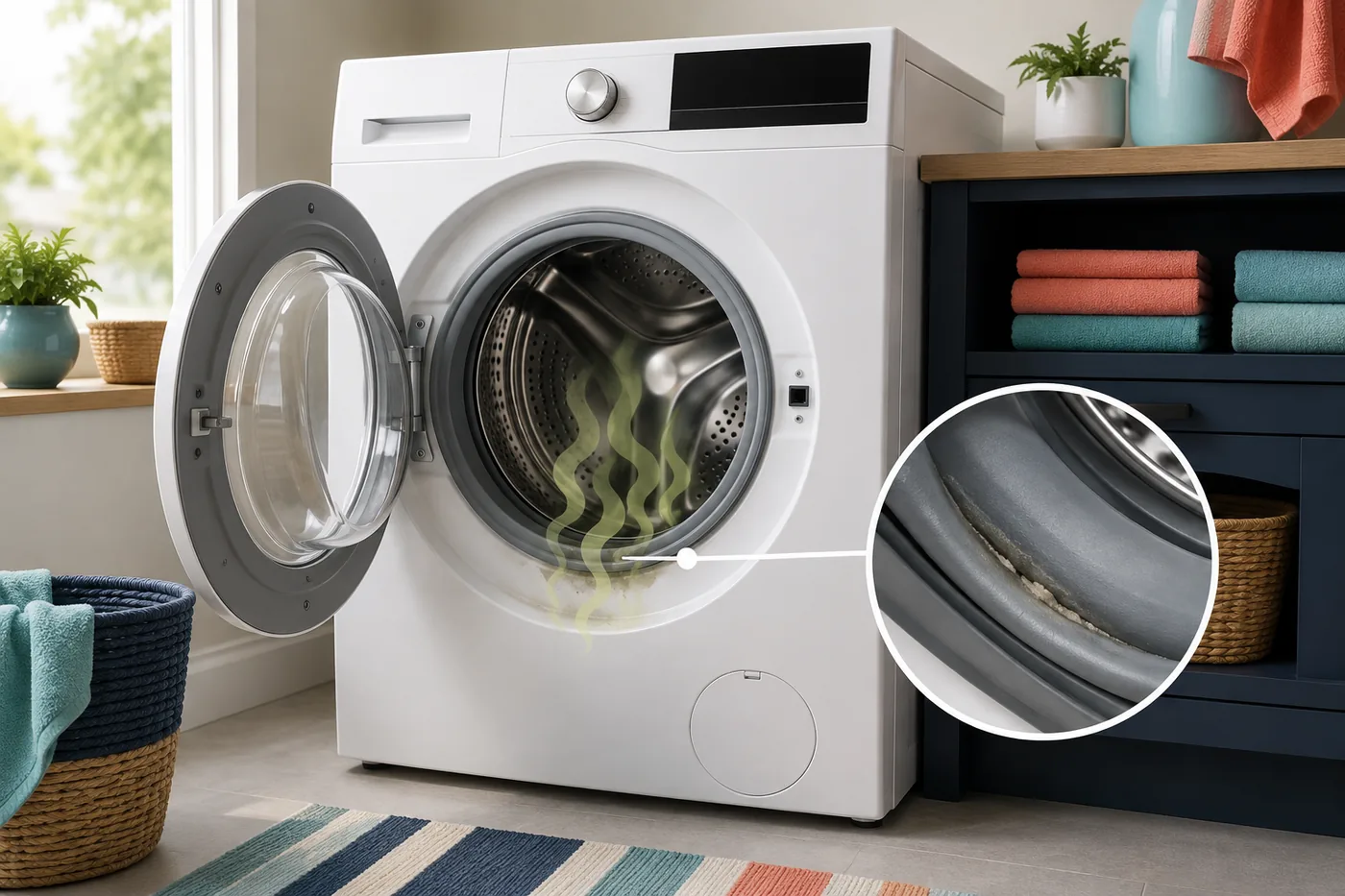
A washing machine that smells like rotten eggs may have trapped residue, a dirty gasket or dispenser, a drain-hose or standpipe problem, or sulfur in the household water. Start by locating when the smell appears: inside the empty drum, when the washer drains, or throughout the room. Do not mix bleach, vinegar, ammonia, or other cleaners, and stop if the odor is strong enough to cause symptoms.
Last updated: September 14, 2026 — Clarified how hot-only and whole-home water odors point to different sources.
Find where the smell starts
| When you notice the smell | More likely direction | Safe first check |
|---|---|---|
| The empty drum smells before a cycle | Residue, damp gasket, dispenser, or filter | Inspect visible surfaces and follow the manual’s cleaning-cycle instructions |
| Odor appears when water drains | Drain hose, standpipe, trap, or trapped dirty water | Check the visible hose path and household drain; arrange plumbing help if needed |
| Hot water at several faucets smells, but cold water does not | Water heater or internal plumbing | Use the heater manual or contact a qualified plumber; do not adjust or flush it blindly |
| All cold-water faucets smell after flushing | Water supply or building plumbing | Check the water supplier’s alerts and contact the utility if the odor persists |
| Clothes smell after washing | Residue, overuse of detergent, or laundry left damp | Remove laundry promptly and review detergent and maintenance instructions |
Quick answer
Locate the odor before cleaning
Run the washer’s manufacturer-approved cleaning or tub-care cycle, clean only the accessible gasket and dispenser areas described in the manual, and leave the door or lid open so the machine can dry. If the smell appears only during draining, investigate the hose and household drain instead of repeatedly cleaning the drum.
Safe checks before cleaning
Open a window if needed, keep children and pets away, and do not combine cleaning products. If the smell is accompanied by a gas-like odor elsewhere in the home, dizziness, nausea, burning, sparking, or a hot-plastic smell, leave the area or disconnect the appliance only if safe and arrange appropriate professional help. A sulfur odor from the water supply is different from a musty residue smell inside the washer.
If water remains in the drum, use the washing-machine drainage guide. When the odor is strongest at the standpipe, compare the installation with the drain-hose checks.
How to remove the odor safely
1. Empty the washer and inspect visible moisture
Remove wet laundry promptly. Look at the door gasket, dispenser drawer, lid area, and any visible standing water. Wipe only the surfaces the manual identifies as user-accessible, using the product and method it recommends. Do not pull back a seal aggressively or reach into a pump opening that is not clearly described for your model.
2. Run the model-approved cleaning cycle
Many washers have a Tub Clean, Self Clean, or Drum Clean program. Run it empty and follow the manual for the approved cleaner, temperature, and amount. Some manufacturers recommend a washer cleaner or oxygen-based product; the correct product and dosage depend on the model. Never combine products or improvise a chemical mixture.
3. Clean the dispenser and gasket areas
If the manual allows it, remove the detergent drawer and rinse away residue. Wipe the accessible folds of a front-loader gasket and remove lint or visible debris. Dry the surfaces afterward. Excess detergent, too many suds, and a drawer that stays wet can feed recurring odors.
4. Let the washer dry between loads
Leave a front-load door or top-load lid ajar when household conditions make that safe. Keep the dispenser partly open if the manual allows it. Do not block a walkway or leave an appliance open where children or pets can reach it. Drying reduces the damp environment that allows residue and microbial growth to persist.
5. Check the drain path if the odor appears during discharge
With power isolated, inspect the visible drain hose for kinks, leaks, or an arrangement that does not match the installation instructions. If the smell comes from the standpipe or utility sink, the restriction or trap may be in household plumbing. Do not remove a wall connection or pour drain chemicals into the washer; use a qualified plumber when the source is beyond the appliance.
6. Compare hot and cold water away from the drain
Check hot and cold water at more than one faucet. To separate the water itself from a drain odor, fill a clean glass and smell it away from the sink. If hot water smells but cold water does not, the water heater or internal plumbing is the more likely direction. If all cold-water faucets remain sulfurous after flushing, check the supplier’s alerts and contact the water utility. Do not change heater controls or flush the heater unless its instructions make that safe; use a qualified plumber when the source is unclear.
When to stop and get help
Arrange appliance service if the smell remains after the model-approved cleaning cycle, returns with standing water, comes with a leak, or is paired with a burning, electrical, or hot-plastic odor. Arrange plumbing help if the smell is strongest at the standpipe, sink, trap, or wall connection. Contact the water supplier or a qualified plumber when sulfur odor is present at several faucets.
Frequently asked questions
Why does my front-load washer smell like sewage?
Residue in the gasket or drain system can smell foul, but an odor that appears during discharge may come from the standpipe, trap, or drain-hose arrangement. Identify when the odor starts before choosing a cleaning step.
Will vinegar and bleach remove the smell?
Do not mix cleaners. Use only the product and cleaning cycle named by the washer’s manual. Combining bleach with acids such as vinegar can create dangerous fumes.
How often should I run a washer-cleaning cycle?
Follow the model manual and the washer’s maintenance reminders. A universal schedule may be wrong for a particular appliance, water condition, or usage pattern.
Sources
This guide follows model-aware odor and maintenance guidance from Bosch, Beko, Samsung, LG, and Haier. Their cleaning products, cycle names, and access instructions differ by model. West Virginia American Water’s taste-and-odor guide supports the hot-only versus all-cold-faucet distinction.